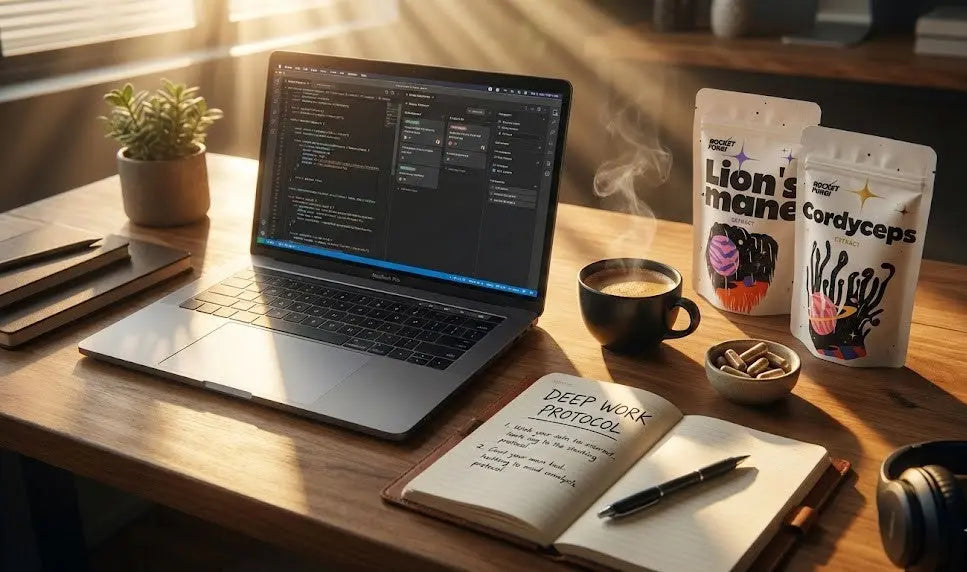
Caffeine vs. Functional Mushrooms: Why You Should Upgrade (Not Quit) Your Morning Coffee
We all love the ritual.
The smell of freshly ground beans. The warmth of the mug. The first sip that signals to your brain: “It’s time to work.”
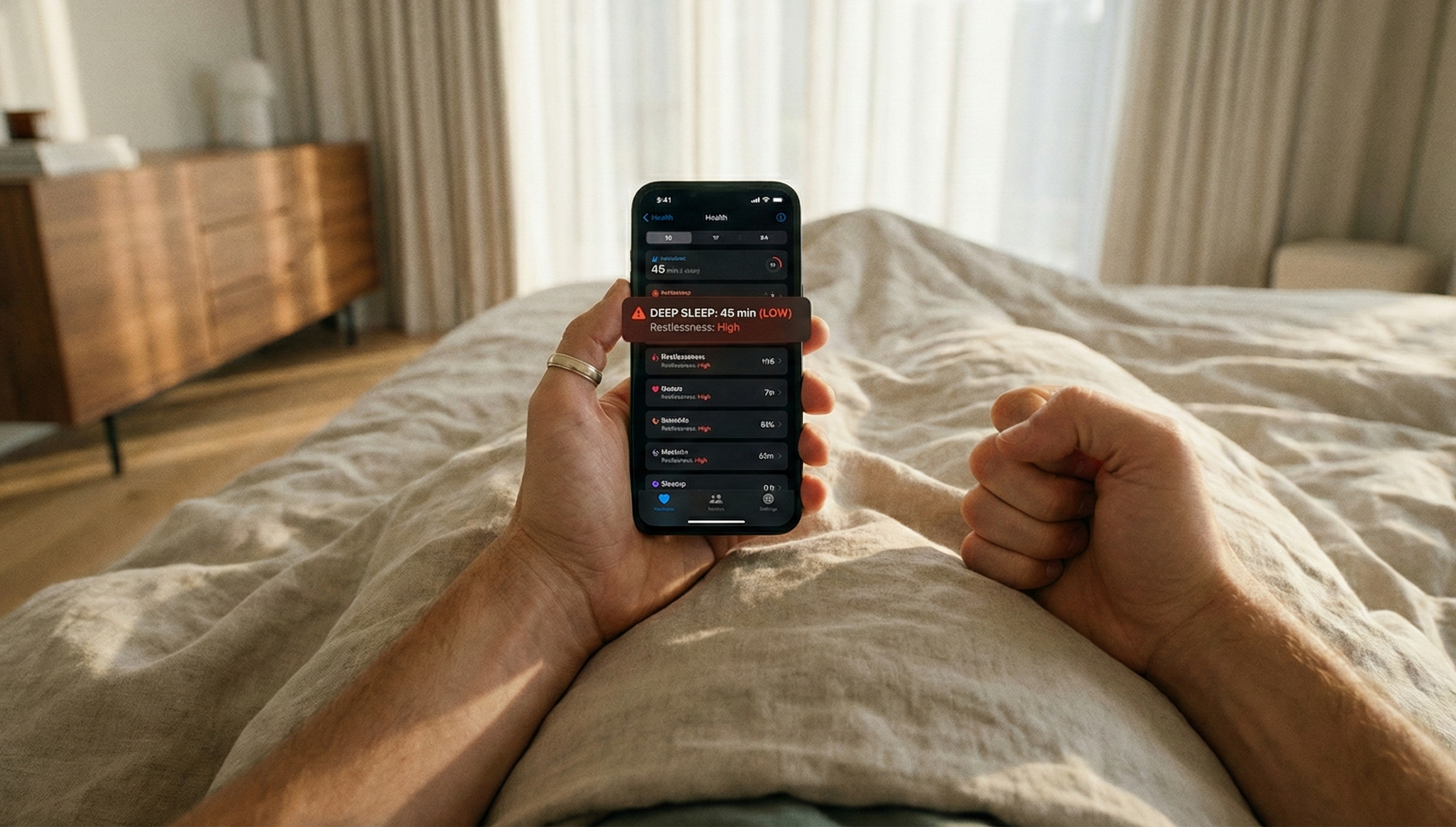
For millions of professionals, coffee isn't just a drink; it's the ignition switch for the day. But let’s be honest about the mechanics. That burst of energy usually comes with a tax: the mid-afternoon "crash," the jitters, and the disrupted sleep.
At Rocket Fungi, we don’t believe you need to quit coffee. We believe you need to optimize it.
Here is the science behind why your morning brew is imperfect—and how functional mushrooms can turn it into a sustainable performance tool.
1. The Anatomy of the "Crash": Borrowing Energy From Tomorrow
To understand why we feel drained by 2:00 PM, we have to look at a molecule called Adenosine.
Adenosine is a chemical that builds up in your brain throughout the day, signaling fatigue. Caffeine works by blocking the adenosine receptors.
Crucial distinction: Caffeine does not create energy; it simply hides the fatigue. It’s like putting a brick behind the brake pedal of your car [1].
When the caffeine wears off, all that accumulated adenosine floods the receptors at once. The Result: The infamous afternoon slump. You feel foggy, irritable, and reach for another cup, which often leads to a cycle of dependency and poor sleep.
2. The Upgrade: Real Energy (ATP) + Neural Support
This is where functional mushrooms—specifically Cordyceps and Lion’s Mane—change the game. They don't compete with caffeine; they complete it.
Cordyceps: The Engine ⚡
While caffeine blocks fatigue signals, Cordyceps helps your body produce actual energy. Studies suggest that Cordyceps sinensis (specifically the CS-4 strain we use) supports the production of ATP (Adenosine Triphosphate), which is the primary fuel source for your cells [2].
-
The Benefit: Instead of just "feeling" awake, your body has the cellular resources to actually be awake. It smooths out the caffeine curve, giving you stamina without the jagged peaks and valleys [3].
Lion’s Mane: The Steering Wheel 🧠
Caffeine stimulates the central nervous system, which can sometimes lead to scattered thoughts or anxiety. Lion’s Mane acts as a stabilizer.
-
The Benefit: It stimulates the synthesis of Nerve Growth Factor (NGF) [4]. When paired with coffee, it channels that raw stimulation into laser-focused clarity. You aren't just buzzing; you are locked in. Clinical trials have shown that Hericium erinaceus (Lion’s Mane) can significantly improve cognitive function scores [5].
The "Rocket Stack": How to Combine Them
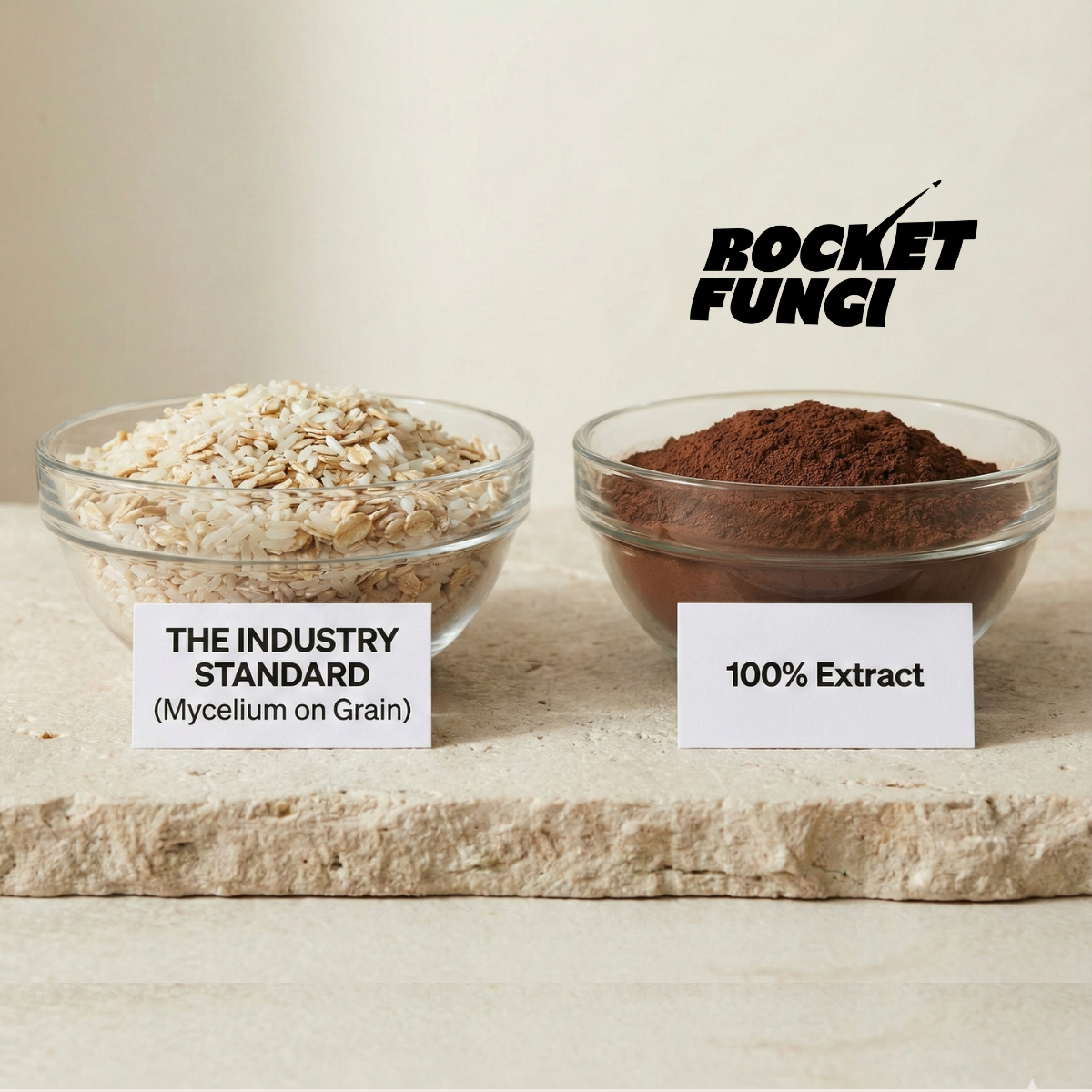
You don’t need to buy expensive "pre-mixed" mushroom coffees that often contain low dosages. You can simply stack high-potency extracts with your favorite quality roast.
The Deep Work Protocol:
-
Morning: Your regular coffee + 3 capsules of Lion’s Mane.
-
Why: To turn that morning caffeine spike into productive, creative focus.
-
-
Early Afternoon (Pre-Slump): 3 capsules of Cordyceps (instead of a second coffee).
-
Why: To boost ATP and oxygen utilization right when your natural energy levels usually dip. This avoids the caffeine crash and keeps your sleep quality intact.
-
The Verdict
Coffee is a fantastic tool, but it is incomplete. Relying on caffeine alone is like driving a sports car in first gear—lots of noise, but not efficient.
By adding functional mushrooms to your routine, you move from simple "stimulation" to "sustained performance."
Ready to upgrade your morning ritual? We bundled the exact protocol described above so you don't have to guess. Get the Focus + Energy set (Lion's Mane + Cordyceps) to cover both your mental clarity and physical stamina.
Shop the Focus + Energy Bundle
Scientific References
At Rocket Fungi, we prioritize transparency. Our claims are backed by peer-reviewed research:
-
Ribeiro, J. A., & Sebastião, A. M. (2010). Caffeine and adenosine. Journal of Alzheimer's Disease, 20(s1), S3-S15. (Explains the mechanism of caffeine blocking adenosine receptors).
-
Ko, K. M., & Leung, H. Y. (2007). Enhancement of ATP generation capacity, antioxidant activity and immunomodulatory activities by Chinese Yang and Yin tonifying herbs. Chinese Medicine, 2(1), 3. (Discusses Cordyceps and ATP production).
-
Xu, Y. F. (2016). Effect of Polysaccharide from Cordyceps militaris (Ascomycetes) on Physical Fatigue Induced by Forced Swimming. International Journal of Medicinal Mushrooms, 18(12). (Study on endurance and anti-fatigue effects).
-
Lai, P. L., et al. (2013). Neurotrophic properties of the Lion's Mane medicinal mushroom, Hericium erinaceus (Higher Basidiomycetes) from Malaysia. International Journal of Medicinal Mushrooms, 15(6). (Identifies compounds stimulating NGF synthesis).
-
Mori, K., et al. (2009). Improving effects of the mushroom Yamabushitake (Hericium erinaceus) on mild cognitive impairment: a double-blind placebo-controlled clinical trial. Phytotherapy Research, 23(3), 367-372. (Clinical trial showing cognitive improvement).